
Somalia National Biodiversity Strategy and Action Plan (NBSAP) 2026–2030
- October 10, 2026
- Posted by: admin
- Category: Report
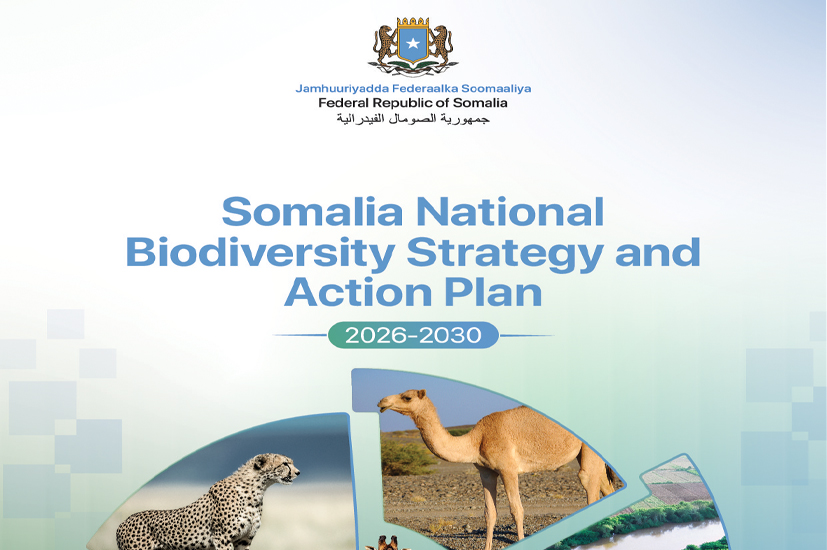
Somalia’s biodiversity, including its rangelands, forests and woodlands, rivers and wetlands, agricultural landscapes, islands, mangroves, coral reefs, wildlife, genetic resources and extensive coastal waters, sustains the lives and livelihoods of millions of people. These ecosystems support pastoralism, farming, fisheries and trade; regulate water and soils; provide protection from droughts, floods and coastal hazards; and carry ecological, cultural and economic values that are central to Somalia’s recovery and long-term development. Safeguarding this natural heritage is therefore a national development responsibility.
The National Biodiversity Strategy and Action Plan 2026-2030 provides Somalia’s strategic framework for meeting that responsibility. It responds to continuing pressures from habitat loss and degradation, unsustainable harvesting, overgrazing, illegal and unregulated fishing, pollution, invasive alien species, infrastructure expansion, climate change, institutional weakness and persistent gaps in biodiversity information. It translates Somalia’s priorities and its commitments under the Convention on Biological Diversity and the Kunming-Montreal Global Biodiversity Framework into five strategic objectives, twenty national targets and a practical programme of action through 2030.
This Strategy places implementation at the center of biodiversity governance. It calls for a whole-of-government and whole-of-society approach suited to Somalia’s federal system. Federal institutions, Federal Member States and local authorities are expected to integrate biodiversity into policies, plans, budgets, public investment and regulatory decisions. Communities, customary institutions, women, youth, civil society, universities, businesses and development partners must participate meaningfully in implementation, monitoring and learning. The rights, knowledge, livelihood needs and stewardship practices of biodiversity-dependent communities must remain integral to conservation and restoration decisions.
The Ministry of Environment and Climate Change will coordinate implementation in partnership with line ministries, Federal Member States, finance and planning institutions, research bodies and non-state actors. Progress will depend on clear responsibilities, effective institutions, enforceable safeguards, reliable data, transparent reporting, sustained financing and accountable partnerships. The Strategy therefore establishes arrangements for coordination, biodiversity mainstreaming, environmental and social safeguards, capacity development, monitoring and evaluation, and resource mobilization. Its provisional financing envelope of USD 500 million will be refined through the national biodiversity-finance process and translated into costed, finance-ready programmes.
I commend the public institutions, technical experts, communities, civil-society organizations, universities, private-sector representatives and development partners whose knowledge and participation informed this Strategy. I call upon all stakeholders to use it as Somalia’s common framework for biodiversity action and to convert its priorities into funded programmes, effective regulation, strengthened institutions and measurable results. Through shared responsibility and sustained implementation, Somalia can restore degraded ecosystems, secure nature-dependent livelihoods and build a more resilient and prosperous future for present and coming generations. Download Here Somalia National Biodiversity Strategy and Action Plan (NBSAP) 2026–2030